
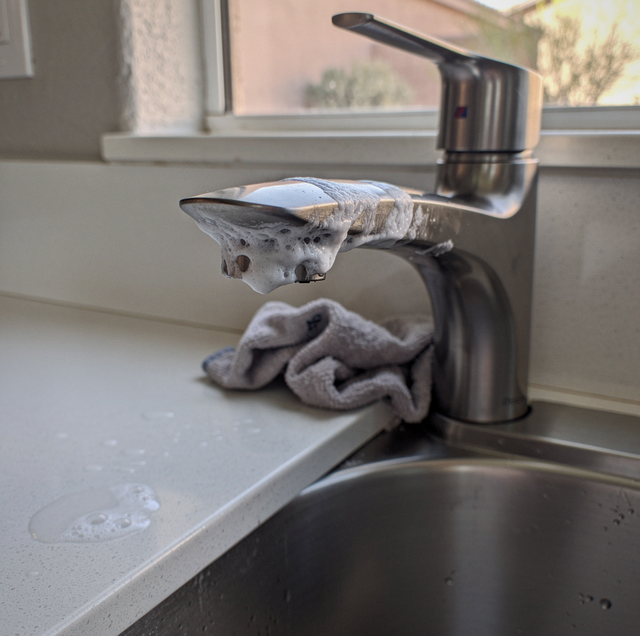
You wipe down the kitchen faucet on a Sunday, and by the following weekend the same white crust is back around the spout. The shower head sprays in a crooked pattern instead of a full fan. The glass door looks foggy no matter how hard you scrub it. None of that is a cleaning failure. It's a mineral doing exactly what it does every time water touches metal and glass and then dries.
Fixture scale isn't dirt, and it isn't a sign anything was installed wrong. It's a natural byproduct of what's dissolved in the water supply, and once you understand the mechanism, the buildup speed and the fixes both make a lot more sense.
What Scale Actually Is
Scale is the hardened residue left behind when water carrying dissolved calcium and magnesium evaporates or gets heated. Those two minerals are naturally present in groundwater almost everywhere, but their concentrations vary widely from one water source to another. Water carrying a heavy mineral load is what plumbers call hard water, and it's the reason a kettle rims up with a white crust, a showerhead loses pressure, and a glass door never quite wipes clean, no matter how much glass cleaner is used.
The minerals themselves aren't dissolved forever. Calcium and magnesium remain suspended in liquid water, but the moment the water evaporates, is heated past a certain point, or sits still long enough, the minerals come out of solution and turn solid. That solid form is calcium carbonate, the same chalky compound found in limestone, and it clings to whatever surface the water touched last: a faucet spout, a shower wall, a screen inside an aerator, or the heating element inside a water heater.
Think of hard water the way you'd think of sugar water left in a glass. As long as the water is there, the sugar stays dissolved and invisible. Let the glass sit in the sun and evaporate dry, and the sugar reappears as a crust on the glass. Mineral scale works the same way, except a fixture doesn't need direct sun. Ordinary use, heat from a water heater, and the simple act of drops sitting and drying on a surface all trigger the same reaction.
Why It Shows Up So Fast on Some Fixtures
A few conditions speed the process up dramatically, and Southwest desert water conditions often bring several of them together at once.
Heat accelerates mineral drop-out: Calcium carbonate becomes less soluble as water gets hotter, meaning hot water holds less dissolved mineral before it starts precipitating out as solid. That's why a water heater, a coffee maker, and a shower head running hot water scale up faster than a cold hose bib doing the same job.
Evaporation concentrates what's left behind: Every time water sits on a surface and dries, any minerals it carried remain while the water itself evaporates into the air. A faucet that drips slowly and dries between uses builds scale faster than one that runs steadily, because repeated evaporation cycles leave layer after layer of mineral residue in the same spot.
Small openings trap the buildup: Shower heads and faucet aerators force water through tiny holes, and those holes are exactly where scale prefers to form first. A layer that would be invisible on a flat countertop becomes a serious blockage once it narrows a pinhole-sized opening. That's why a shower head often loses pressure and starts spraying at odd angles long before any other fixture in the house shows a problem.
Mineral concentration in the water supply itself: Some groundwater simply carries more dissolved calcium and magnesium than others. A higher starting concentration means every evaporation cycle deposits more solid material, so fixtures on a heavier water supply scale up measurably faster than the same fixtures would on a softer supply.
The Early Signs Worth Noticing
Scale rarely announces itself all at once. It builds in stages, and catching it early keeps the fix simple.
A white or gray crust around spouts and drains: This is the most visible sign, and it's usually the first one homeowners notice. Wiping it away and having it return within days means the source water is depositing minerals faster than routine cleaning can keep up.
Cloudy spots on glass shower doors and drinking glasses: Water that dries on glass leaves behind a hazy film of dissolved minerals. Regular glass cleaner cuts through grease and soap residue but often can't touch a mineral film, which is why the haze seems to resist normal cleaning.
Uneven or weak spray from a shower head: As scale narrows the small holes in a shower head, water pressure through each opening changes. Some holes clog completely while others stay open, producing the crooked or splayed spray pattern that's a classic scale symptom.
Slower fill times on toilets and reduced flow at faucets: Scale doesn't stop at visible surfaces. It builds inside supply lines, valves, and aerator screens, gradually narrowing the passage and reducing flow even when nothing looks obviously wrong from the outside.
A crunchy or gritty feel on fixture surfaces: Once scale layers build up enough, they stop being smooth. A rough or gritty texture under a fingertip usually means the deposit has been building for a while, not just a few days.
Soap that won't lather well: Calcium and magnesium react with soap before it can foam properly, leaving a dull, film-forming residue instead of clean suds. If handwashing suddenly takes more soap to get the same lather, that's the same mineral load behind the fixture crust showing up in a different form.
What Makes Scale Build Faster Than It Has To
A few everyday habits speed up mineral deposits without anyone realizing it.
Letting faucets drip instead of fixing a worn washer means constant evaporation cycles at the same spot, and that spot becomes a scale magnet faster than a faucet that's fully shut off between uses. Running a water heater hotter than it needs to be pushes more mineral out of solution with every cycle, since heat is one of the main triggers for calcium carbonate to turn solid. Skipping regular cleaning lets early, thin deposits harden into a thicker crust that's much tougher to remove later, because scale that's had time to cure bonds more tightly to a surface than scale that's still fresh.
Fixtures that see heavy daily use, kitchen faucets and primary shower heads especially, naturally build scale faster simply because they're wet and drying out more often than a guest bathroom sink used once a week. And any fixture that runs consistently hot water, like a shower or a dishwasher supply line, is at a mechanical disadvantage compared to fixtures that run mostly cold water, for the same solubility reason described above.
What Actually Slows Scale Down
The good news is that scale is manageable once you know what's driving it, and most of the effective habits are simple.
Wipe fixtures dry after use. Removing standing water before it evaporates on its own removes the main trigger for mineral deposits. A quick pass with a towel on the shower door or faucet spout after the last use of the day makes a real difference over weeks and months.
Soak removable parts in a mild acid. Plain white vinegar dissolves calcium carbonate effectively because the acid reacts with the mineral, breaking it back into a soluble form. Soaking a shower head or aerator in a bag of vinegar for an hour or two, then rinsing and brushing off loosened residue, clears buildup that scrubbing alone won't touch. This works on removable parts; it isn't a fix for scale building deep inside fixed plumbing.
Keep water heater temperature at a reasonable setting: A moderate thermostat setting, rather than the hottest available, reduces how aggressively minerals drop out of solution inside the tank and the fixtures downstream from it.
Fix drips and leaks promptly: A dripping faucet isn't just wasted water; it's a constant source of fresh mineral deposits in the same spot. A new washer or cartridge often solves both problems at once.
Clean aerators and shower heads on a regular schedule: Unscrewing an aerator and rinsing the screen every few months prevents the kind of buildup that eventually needs a stronger soak or a full replacement.
Address the water at its source with treatment equipment: Wiping, soaking, and cleaning all treat the symptom fixture by fixture. A whole-house water softener or conditioning system treats the water before it reaches any fixture, removing or altering calcium and magnesium ions so there's far less of them left to deposit anywhere in the house. For a household where scale builds up fast across multiple fixtures at once, treating the water supply directly is usually the more lasting fix compared to cleaning each fixture repeatedly.
When to Call a Plumber
Some scale problems are a wipe-and-vinegar job. Others point to something that needs a professional look.
A shower head or faucet that stays clogged even after a thorough vinegar soak may have internal scale a homeowner can't reach without disassembling parts that aren't meant to come apart. A water heater losing hot-water capacity, making popping or rumbling noises, or taking longer to reheat often has a heavy scale buildup on its heating element or tank bottom, and that's a job for a plumber who can inspect and flush the unit safely. Noticeably reduced water pressure throughout the house, rather than just at one fixture, can mean scale has built up inside supply lines themselves, which isn't something a homeowner can clean out with a vinegar bag.
A plumber can also test the water's actual hardness level, which tells you whether the mineral content is high enough to justify a whole-house treatment system rather than ongoing fixture-by-fixture cleaning. That test takes the guesswork out of deciding between routine maintenance and a more lasting fix, and it's worth doing before buying equipment based on a guess about how hard the water really is.
Frequently Asked Questions
Is mineral scale on fixtures a health concern?
No. Calcium and magnesium are naturally occurring minerals, and scale itself isn't a safety hazard to touch or have in the house. The concern with scale is mechanical: it narrows openings, coats heating elements, and shortens the working life of fixtures and appliances, not a health risk to people.
Does bottled or filtered drinking water affect fixture scale?
Not directly. Fixture scale comes from the same water that supplies every tap in the house, including the lines feeding sinks and showers, regardless of whether a separate filter treats the water at the kitchen tap for drinking. Only treatment applied to the whole water supply, rather than a single drinking tap, changes what reaches fixtures throughout the house.
Can scale actually damage a fixture permanently, or is it just cosmetic?
It can go past cosmetic. Left long enough, scale narrows internal passages in faucets and valves, pits some metal finishes underneath the deposit, and coats components like cartridges and O-rings so they wear unevenly. A fixture that's been scaled for years sometimes needs replacement parts even after the visible crust is cleaned away.
Why does scale seem worse in some rooms of the house than others?
Rooms with fixtures that see heavier use, run hotter water, or have less airflow to help surfaces dry evenly tend to show scale sooner. A primary bathroom shower used daily will typically show buildup well before a rarely used guest bathroom, even though both are supplied by the same water.
Are all mineral deposits the same, or does the type of buildup vary?
Calcium carbonate is the most common deposit and the one behind most white, chalky crust, but magnesium compounds and, in some water supplies, small amounts of iron or silica can contribute reddish stains or a slightly different texture alongside the classic white scale. A plumber or a water test can tell you which minerals are actually driving the buildup in a specific home.
Do all fixture finishes scale at the same rate?
No. Chrome and stainless finishes tend to show buildup clearly because deposits contrast against the shiny surface, while brushed or matte finishes can hide early scale longer even though the same amount of mineral is depositing underneath. Textured finishes also give scale more surface area to grip, which can make cleaning slightly harder once buildup sets in.