
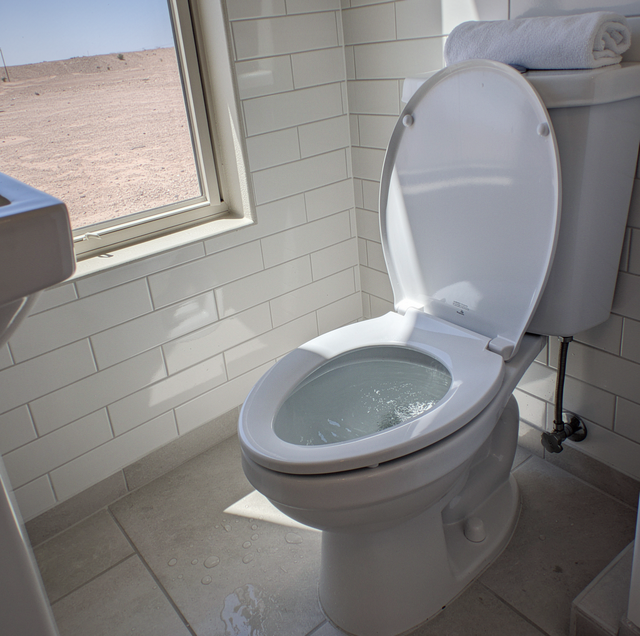
You flush the toilet, or maybe it's just sitting there full, and it suddenly bubbles and gurgles right as the washing machine starts draining down the hall. Nothing touched the toilet directly. No one used that bathroom. Yet the water in the bowl churns as if something beneath it is fighting for air, because, in a real sense, it is. That gurgle is the sound of a plumbing system trying to equalize pressure, and understanding why it happens tells you whether it's a shrug-and-move-on nuisance or an early warning worth checking out.
What The Gurgling Sound Actually Is
A drain isn't a passive tube waiting for water to fall through it. Every fixture in your home is connected to a network of pipes that carries wastewater away and, just as importantly, a parallel network of vent pipes that lets air move in and out of that system. When water rushes down a drain line, it pushes a slug of air ahead and creates a vacuum behind it. Under normal conditions, vent pipes supply air fast enough that you never notice the exchange.
Gurgling is what you hear when air can't move where it needs to go quickly enough. Instead of a clean, quiet flow of air through the vent system, air is pulled backward through the nearest available opening, usually a fixture's water trap. The standing water in a toilet bowl, a sink, or a floor drain sits right at the point where a pocket of air is trying to squeeze through, and bubbling that water is the visible result. The sound isn't coming from the fixture that's gurgling. It's coming from wherever the air is being forced to find its way in.
Why Your Vent System Exists In The First Place
Every drain trap in your home, the curved section of pipe under a sink or built into a toilet's base, holds a small reserve of water on purpose. That standing water blocks sewer gas from drifting back up into the house. It works well, but only if the water stays in the trap. Draining water fast enough through a nearby pipe can create suction strong enough to pull that water partway or entirely out of the trap, which is exactly what the vent system is built to prevent.
Vent pipes run from the drain system up through the roof, giving air a direct path to enter the pipes near each fixture instead of being pulled through a trap. When a toilet flushes or a washing machine dumps several gallons at once, the vent supplies air to fill the space that water is vacating, so pressure inside the pipe stays close to neutral. A properly vented, unobstructed system moves that air fast enough that you would never hear a thing. Gurgling means the air took the harder path instead of the easy one.
A Blocked Or Restricted Vent Stack
The main vent stack, the vertical pipe that runs from your drain system up through the roof, opens to outside air at the top. That opening is small and exposed, which makes it an easy target for debris. Leaves, a bird's nest, wind-blown yard waste, or ice in a cold snap can partially or fully block it. Once that happens, the vent stops doing its job. Air cannot get in from outside, so the system pulls it from the next easiest source: a fixture trap somewhere in the house.
A blocked vent tends to produce gurgling that shows up consistently in the same one or two fixtures, often the ones farthest from the vent stack or lowest in the plumbing layout, like a basement floor drain or a ground-floor toilet. If the gurgle happens every time, in the same spot, and seems tied to one particular vent run rather than the whole house, a restricted vent opening is one of the more obvious explanations, and often one of the easier ones to confirm and clear.
A Partial Blockage In A Shared Drain Line
Vent problems aren't the only mechanism that produces this sound. A partial clog in a horizontal drain line shared by multiple fixtures can create the same pressure imbalance, even with a fully open, unobstructed vent stack. Picture a shared line running from a bathroom group toward the main drain, with a laundry connection joining it partway along. If buildup or debris narrows the shared pipe downstream of where the washer ties in, water discharged from the machine encounters resistance. Instead of flowing past freely, it backs up slightly, pressurizing the section of pipe behind the restriction.
That pressurized air and water have to go somewhere, and the path of least resistance is often back up through a trap at the next fixture connected to that same section of line. That's why a toilet or tub on the same branch can gurgle even though nothing is wrong with its own drain or trap. This is a meaningfully different problem than a blocked vent: it isn't about air failing to get in from outside, but about a restriction inside the shared line forcing pressure to find an exit through whichever trap sits closest.
Why It's Rarely The Fixture That's Gurgling
One of the more confusing parts of this symptom is that the fixture making the noise is often fine on its own. Snaking or plunging a gurgling toilet by itself typically accomplishes nothing, because the toilet was never clogged. It's a bystander reacting to a pressure change caused elsewhere in the shared line or vent system. That's the core difference between this kind of gurgling and a plain single-fixture clog.
A single clogged drain generally slows or stops water at that one fixture and stays that way until it's cleared, with no effect on anything else in the house. Gurgling tied to airflow or shared-line pressure behaves differently: the fixture drains fine on its own, and the noise only appears when a different fixture is running at the same time. If you can predict the gurgle by watching what else is in use, that pattern is itself a useful clue, and it points away from that fixture's own trap or drain line as the source of the trouble.
Low Fixtures Tend To Gurgle First
Water and air both follow pressure and elevation, so fixtures positioned lowest in a home's plumbing layout, or physically closest to the shared line under stress, tend to show symptoms before anything higher up does. A basement floor drain, a ground-floor toilet, or a low tub often reacts before an upstairs sink shows any sign of trouble, even though the underlying cause is the same shared blockage or vent restriction affecting the whole branch. A single low fixture gurgling doesn't necessarily mean the problem is small; it might just mean that fixture sits at the point where pressure changes show up first.
Minor Nuisance Or Bigger Problem
Not every gurgle points to something urgent. An occasional, faint gurgle that doesn't repeat in a predictable pattern and clears up on its own can sometimes be traced to a trap running a little low on water after sitting unused for weeks, or to a brief pressure fluctuation that isn't part of a developing trend. Refilling a dry trap by running water into it for a few seconds is a reasonable first step before assuming something more serious is going on.
A gurgle that repeats consistently, that you can predict based on which other fixture is running, that grows louder or more frequent over weeks, or that comes with slow drainage, a sewer-gas smell, or water backing up anywhere in the house is a different category. Those signs point to either a genuine vent restriction or a partial blockage forming in a shared line, and both tend to worsen rather than improve without attention. A restriction that's narrowing gradually today can become a full blockage later, and a shared-line problem left alone rarely resolves on its own before it finally backs up all the way.
What A Professional Diagnosis Involves
Because the symptom can trace back to either the vent system or the drain line itself, and because both are largely hidden behind walls, under floors, or on the roof, working out which one is responsible usually takes more than a visual check from inside the house. A plumber typically starts by mapping which fixtures gurgle and under what conditions, since that pattern narrows down which section of shared line or which vent run is involved. From there, a camera run through the affected line can show a partial blockage directly, while a check of the vent stack opening on the roof can confirm or rule out an obstruction at the source.
Smoke testing is another tool sometimes used for trickier cases, where harmless smoke is introduced into the vent system to reveal a break, a disconnected joint, or a blockage that isn't visible any other way. The point of a proper diagnosis is avoiding guesswork. Clearing a vent that was never blocked, or snaking a line that was never actually restricted, wastes effort without solving anything, and the pressure imbalance keeps producing the same symptom.
Frequently Asked Questions
Does a gurgling drain always mean a clog?
Not necessarily. Gurgling is a pressure symptom, not a blockage symptom by itself. It can come from a partial blockage in a shared line, but it can just as easily come from a blocked or undersized vent stack with no actual clog anywhere in the drain line.
Why does my toilet gurgle when the washing machine drains?
The two fixtures likely share a section of drain line downstream. If that shared line has any restriction, or if the vent serving that branch isn't supplying air fast enough, the pressure created by the washer draining can push air back up through the toilet's trap, producing the gurgle.
Can a gurgling drain fix itself?
An occasional gurgle tied to a trap that ran low on water can resolve once the trap refills. A gurgle that repeats in a predictable pattern tied to another fixture running usually will not resolve without addressing the vent restriction or shared-line blockage causing it.
Is a gurgling drain dangerous?
By itself, an occasional gurgle isn't hazardous. But a gurgle paired with a sewer-gas smell can mean water has been pulled out of a trap, which removes the barrier that normally keeps sewer gas out of the house, and that combination is worth addressing rather than ignoring.
How is a vent problem different from a clogged drain?
A clogged drain affects one fixture and stops water from draining at that fixture specifically. A vent or shared-line pressure problem affects airflow across multiple connected fixtures, so the fixture that gurgles is often draining properly on its own; the noise appears only when another connected fixture is in use.
What tools does a plumber use to find the cause of gurgling drains?
A camera run through the affected drain line can directly reveal a partial blockage, and a check of the vent stack opening can confirm whether debris or an obstruction is restricting airflow at the source. Smoke testing is sometimes added for harder-to-pin-down cases involving a break or disconnected vent joint.