
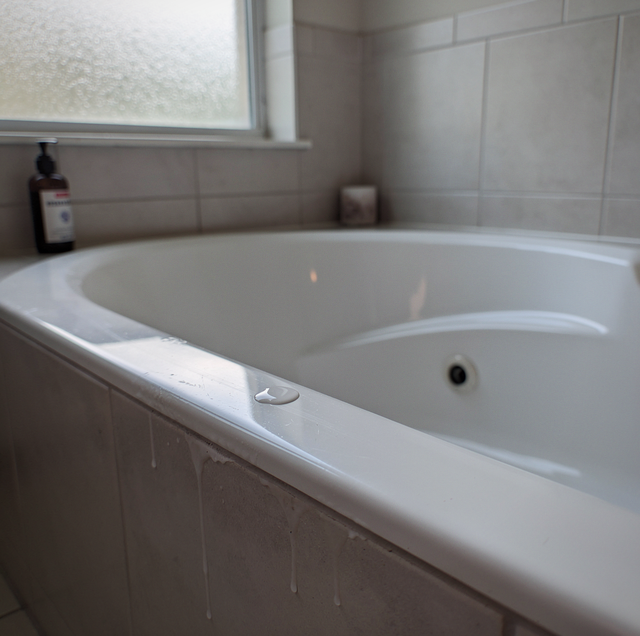
The tub in the room right now is one of four things: a molded acrylic shell over a rigid backing, a sprayed fiberglass shell, a steel pan fused to a glass-like porcelain coating, or a solid cast-iron casting wearing that same coating. A hand across the bottom gives away almost nothing about what's underneath, or how many years are left before that surface becomes your problem.
All four materials eventually fail, each on its own schedule and in its own way. The finish is the first layer applied to every one of them, no matter which tub you happen to own. The four stop behaving alike only after that layer gives out, and by then you are choosing between a repair and a replacement.
The Finish Wears Before the Shell Does
Acrylic, fiberglass, porcelain-on-steel, and cast iron are four shells, each carrying three finishes, and all four show a smooth, glossy surface on day one. That outer layer does far more work than it looks: it meets water, skin, and your cleaning products thousands of times a year, and on all four it is the first layer engineered to wear out, well ahead of the material underneath it.
On fiberglass, that outer layer is a sprayed resin coating known as gelcoat, thin enough that repeated flexing of the shell beneath it opens a network of fine surface cracks over time, a pattern called crazing, long before the fiberglass structure gives way. Porcelain-on-steel and cast iron carry a different finish: a glass coating fused to the metal at very high heat, harder and more scratch-resistant than gelcoat, but it doesn't flex with the metal underneath, so a sharp impact chips it there instead, a different pattern than the crazing gelcoat shows. Acrylic dulls and loses its sheen under repeated cleaning long before it structurally fails, and that dulling is often the very first sign a homeowner notices.
Which failure shows up first, and how fast, depends much less on the material's name than on what's supporting your tub from below and on how it gets cleaned.
Impact Damage Shows Up Differently on Each Surface
A dropped shampoo bottle or a razor lands the same way on any of the four tubs, but the mark it leaves behind depends on the exact material sitting underneath that outer finish. On porcelain-on-steel and cast iron, a hard enough impact chips the glazed coating straight through to the metal, leaving a small bare spot that's rougher and noticeably duller than the surrounding glaze.
Cast iron's greater mass absorbs more of that impact before the coating cracks, so a hit that chips a lighter steel-shell tub often just scuffs a heavier cast-iron one. Once either metal is exposed, that bare spot lets a steel pan start to rust from underneath its own glaze fairly quickly, while exposed cast iron corrodes far more slowly, since the casting is many times thicker than a steel pan's sheet, so the same rate of rust takes far longer to matter.
Acrylic is a moldable polymer, and when struck sharply, it tends to dent or turn white rather than chip outright. You'll usually feel a slight give at that spot with a fingertip well before you'd see a crack. Fiberglass sits between the two: its gelcoat is harder and more brittle than acrylic, so a knock stars or chips the gelcoat, leaving a shallow crater with fine lines radiating from it. No bare metal, so no rust, but the laminate underneath is open to water.
What's Underneath Determines How Long a Shell Holds Its Shape
Acrylic and fiberglass shells are both fairly thin relative to their overall size, and neither is designed to span open air unsupported. Acrylic is typically backed with a rigid layer such as ABS plastic, and that backing needs continuous, even contact across your tub's entire base with a support bed, foam, mortar, or a set of adjustable leveling feet.
Leave a gap under any part of that base, even a small one, and the shell flexes every time someone steps or sits in your tub. That flex doesn't crack the shell outright on day one; it fatigues the surface at the exact point of the gap, and over years of repeated flexing, a stress crack or a soft spot eventually shows up there, always at the gap.
Fiberglass has the same support requirements for the same structural reasons, and an unsupported span shortens its working life in the same way. A steel-shell tub is thinner still, so a poorly leveled steel pan can flex enough to crack its own glaze at the flex point, even where the support bed under it is complete.
Cast iron is the outlier here. Its mass makes it rigid enough on its own that it doesn't need a support bed to hold its shape, which is why a claw-foot tub in an old bathroom puts its full load on four feet without the flex-related cracking that lighter materials show. What it does depend on is a floor structure built to carry that considerable weight in the first place, since the failure risk shifts from the tub itself to the framing underneath it.
Cleaning Habits Wear Materials at Different Rates
The same cleaning routine wears down each of these four surfaces at different rates, and the surface itself matters more than the specific cleaning product label ever does. An abrasive scrub pad or a gritty powder cleanser puts fine scratches into acrylic almost immediately, and each pass dulls the gloss a little more, which is why an older acrylic tub in your home can often look hazy well before it's actually dirty.
Porcelain glaze resists that kind of abrasive scratching far better, since it's a fired, glass-based coating rather than a soft polymer surface, but it isn't immune to chemical wear. Acid-based descaling products, the kind used to strip hard-water mineral scale off a fixture, can etch an older or thinner section of glaze over repeated use, leaving a dull patch that no scrub pad would have caused. Gelcoat is exposed on both counts: abrasives cut it as readily as acrylic, and a descaler left to dwell softens and yellows the resin, so on a tub you have already had refinished, the thin spots give way first.
Cast iron's fired enamel is the most abrasion- and chemical-resistant finish of the four, which is why decades-old cast-iron tubs are still common in older homes, but the same acid-based descalers will dull even that tough coating given enough repeated exposure. The finish on any of them lasts longest when your cleaner is matched to the surface it is going onto.
The Signs That a Tub Has Reached the End of Its Line
Fiberglass usually shows its own end first, with a network of fine crack lines spreading across the base, or a soft spot that gives underfoot where the underlying support has failed. Porcelain-on-steel and cast iron show it differently: chips cluster around a single impact zone, and rust reaches a steel pan years before it reaches cast iron.
Acrylic tends to fail without cracking at all: the shell separates from its rigid backing over time, which shows up as a section that gives noticeably more when you press on it firmly, with no crack line anywhere nearby. A bathtub carries its working load at one plane, the floor of the basin, with the rim flange doing little more than holding the tub to the wall.
Frequently Asked Questions
Cast iron generally takes an everyday knock best, since its mass absorbs the hit. A fresh chip on porcelain or cast iron can often be filled with a touch-up epoxy kit if you catch it early, before rust gets started underneath. Acrylic just dents, and your fingertip usually feels that give before your eye catches it.
Support methods are not interchangeable. A tub specified for a mortar bed and then set on leveling feet alone is unsupported by design before anyone steps in. Which method a model requires is printed on the manufacturer's rough-in sheet, so ask for it before your tub goes in; retrofitting a bed under your installed tub means pulling it out.
Yes, and even a plastic mesh pad sold as gentle leaves fine scratches on your tub. The difference is repairability: acrylic is colored all the way through the sheet, so a light scratch polishes out and the color beneath matches. Cut through porcelain glaze, and you reach metal, which no polishing brings back, so your options are filling or refinishing.
Porcelain's glaze dulls mainly through chemical exposure, since a fired glass coating already resists ordinary scratching quite well on your tub. Run your fingertip over a dulled patch and pay close attention: chemical dulling feels smooth to the touch, while abrasive damage feels faintly gritty under a fingernail. That smooth feel usually points to a strong descaling product at work.
Sometimes, depending on the crack. A hairline crack confined to the gelcoat can often be filled and refinished, since the fiberglass underneath may still be sound. A crack running through to the structural layer, or one that keeps reopening, usually means the support underneath has already failed. If yours keeps coming back, have your installer check the support before you pay for the surface again.
Weight is the real trade-off. A typical 60-inch cast-iron alcove tub weighs around 316 pounds empty, several times what an acrylic or fiberglass shell of the same size weighs, and water and a bather sit on top of that. If your bathroom sits over an older floor, get your floor framing checked before you order the tub.
Get your tub and the support under it checked — a finish chipped to bare metal, a floor gone soft underfoot, or a shell separating from its backing is closer to failing than the surface suggests. Jimmy Joe's Plumbing serves Mesa, Phoenix, and the Valley. ROC 273293. Call (480) 757-1273.