
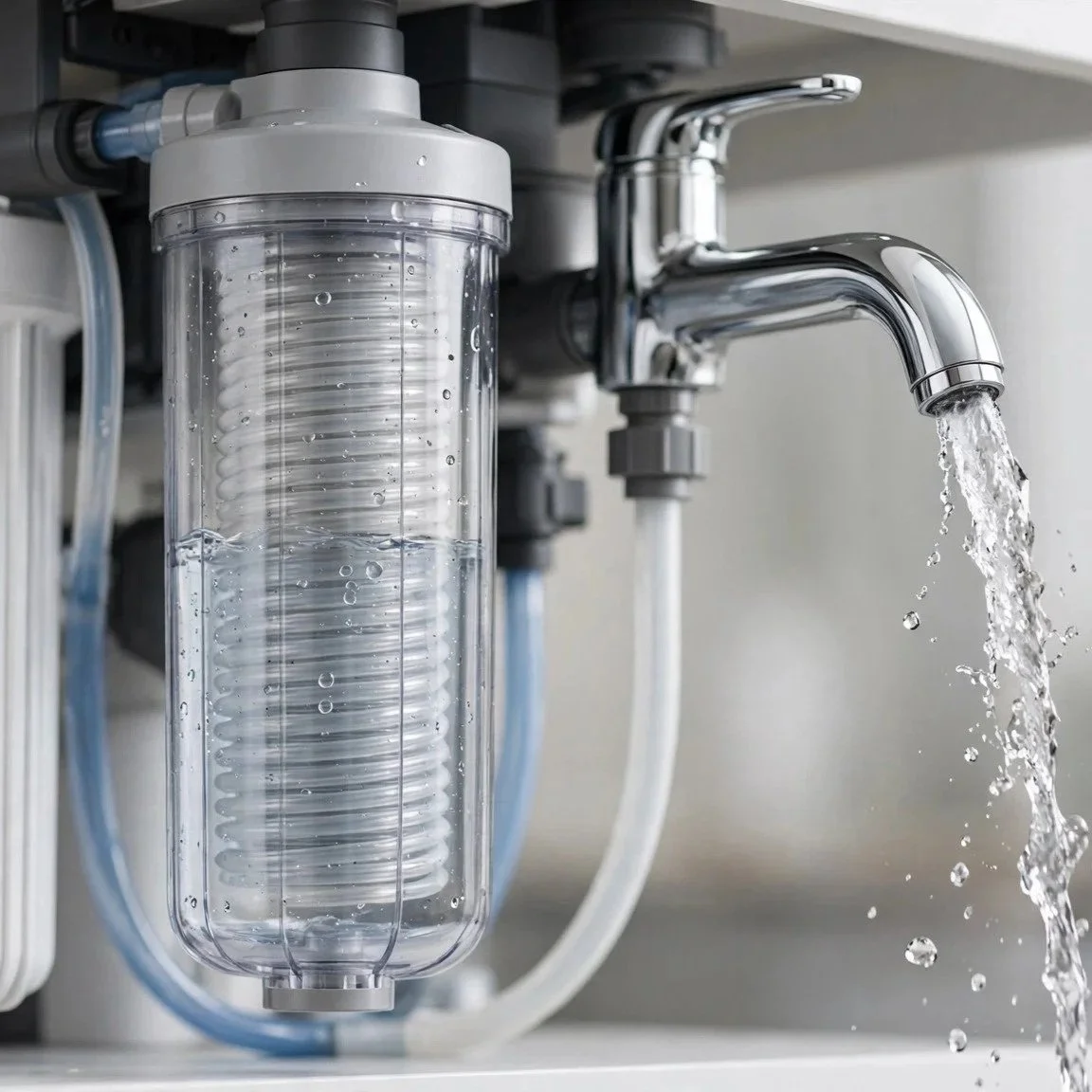
Reverse osmosis, usually shortened to RO, is one of the most thorough ways to clean drinking water inside a home. It does not use chemicals or heat. It uses pressure and a very fine barrier to separate clean water from almost everything dissolved in it. If your tap water tastes off, leaves chalky spots, or came back with a test result you did not like, an RO system is often the answer people land on. Knowing how it actually works helps you decide whether it fits your situation and what upkeep it will ask of you.
The Membrane Does the Real Work
Start with the membrane, because everything else in an RO system exists to protect and support it. A reverse osmosis membrane is a tightly wound sheet of semipermeable material with pores measured in fractions of a nanometer. Water molecules are small enough to slip through. Most dissolved solids, salts, and larger molecules are not, so they get left behind.
The "reverse" part refers to osmosis run backward. In natural osmosis, water drifts on its own from a less concentrated solution toward a more concentrated one across a membrane. Forcing water the other way, from the dirtier side to the cleaner side, takes energy. That energy comes from your home's water pressure pressing against the membrane. Only water that gets through counts as product water; whatever cannot pass stays on the incoming side and is flushed away.
Because the membrane rejects material by size and charge rather than by trapping it in a bed of media, it removes a broad range of dissolved contaminants that a simple carbon cartridge would miss entirely. That breadth is the reason RO is used for both taste complaints and specific health-driven contaminant concerns.
The Stages of a Typical Under-Sink RO System
A membrane alone would clog and fail quickly, so a household RO unit surrounds it with several filters in sequence. A common layout runs like this.
Sediment pre-filter: The first cartridge catches sand, rust flakes, silt, and other grit. Removing physical particles up front keeps them from scratching or plugging the membrane.
Carbon pre-filter: Next, one or two carbon stages strip out chlorine and chloramine along with the tastes and odors they carry. This step is not optional dressing. Chlorine slowly damages the most common RO membrane material, so the carbon stage guards the membrane as much as it improves flavor.
The RO membrane: Now the pre-treated water hits the membrane itself, where the bulk of dissolved contaminant removal happens. Clean water collects on one side; the rejected portion carries the contaminants to the drain line.
Storage tank: RO produces water slowly, often only a fraction of a gallon per minute, so the system parks treated water in a small pressurized tank. That way a full glass arrives the moment you open the faucet instead of trickling out.
Post-filter or polishing carbon: On its way from the tank to the dedicated faucet, water passes a final carbon stage. This polishes taste and catches anything picked up while sitting in the tank.
That dedicated faucet matters. RO water usually feeds a separate spout at the sink or a line to the refrigerator and ice maker, not every tap in the house.
What RO Removes and What It Needs Help With
The membrane handles dissolved material that most other home filters cannot touch. Depending on the specific system and its condition, reverse osmosis reduces:
Total dissolved solids (TDS), the broad measure of dissolved salts and minerals
Lead and arsenic
Fluoride
Nitrates
Hardness minerals such as calcium and magnesium
A range of other dissolved chemicals
A useful way to think about the membrane is a bouncer at a very narrow door: water molecules are small enough to walk through, while the bulkier dissolved solids and metals get turned away and sent back out the exit.
The membrane has real limits, though, which is why the carbon stages sit ahead of it. Chlorine and chloramine pass through the membrane rather than being blocked, and worse, chlorine degrades the membrane over time. The carbon pre-filters handle those before the water ever reaches the membrane. So RO is best understood as a team: carbon for chlorine, taste, and odor, plus the membrane for dissolved solids and metals.
One safety point deserves emphasis. Reverse osmosis is not a disinfection method. It reduces many contaminants, but it should not be treated as a cure for water that is biologically unsafe. If a test comes back positive for bacteria, that water needs proper disinfection, commonly ultraviolet treatment or another approved method, not an RO unit on its own. Never rely on RO for water of unknown safety without testing it first.
The Water RO Sends Down the Drain
Reverse osmosis does not turn every gallon that enters into a gallon you drink. Part of the incoming water is used to rinse the rejected contaminants off the membrane surface and carry them to the drain. That discharged flow is called reject water or brine, and the split between product water and reject water is the recovery ratio. Older or lower-recovery units may send several units of water to the drain for each unit they produce, while newer designs improve on that.
This is a normal part of how the technology stays clean, not a malfunction. If a system suddenly starts sending far more water to the drain than usual, that points to a fouled membrane or a pressure problem worth checking.
RO Removes the Good Minerals Too
Because the membrane strips dissolved solids indiscriminately, it also removes the calcium, magnesium, and other minerals that give water some of its flavor and nutritional trace value. Many people find RO water tastes flat or slightly acidic for that reason.
The common fix is a remineralization stage, a cartridge that adds a controlled amount of minerals back after the membrane. It rounds out the taste and raises the water's pH a little. Not every household wants or needs it, but it is worth knowing the option exists if the water tastes too bare.
Point-of-Use Versus Whole-House RO
Most residential RO is point-of-use: a compact unit under one sink treating the water you drink and cook with. This is the practical match for the technology, since RO works slowly and most household water use, such as showering, laundry, and irrigation, does not need drinking-grade purity.
Whole-house RO exists but is a much larger commitment. It needs a high-capacity membrane array, larger storage, a pump, and often remineralization to keep the water from being aggressive toward pipes and fixtures. It is generally reserved for situations with severe water-quality problems across every fixture. For most homes, treating drinking water at one tap delivers the benefit where it counts without the scale and expense of purifying water that will simply run down the shower drain.
Installation and Maintenance
An under-sink RO system ties into the cold water supply and the drain, and it needs proper backflow protection, typically an air gap on the drain connection, so waste water can never siphon back into the clean side. That plumbing work is why installation is a job for a licensed plumber rather than a casual afternoon project, particularly the supply tap and drain connection.
Upkeep is simple once the unit is in. The pre-filters and post-filter are the wear items and typically get changed on a schedule of roughly every six to twelve months, sooner if the incoming water is dirty. Sticking to that schedule matters, because a neglected, fouled cartridge can breed bacteria and let particles reach the membrane. The membrane itself lasts longer, commonly a few years, before it needs replacing. The system should also be sanitized periodically, usually when filters are changed, and the storage tank checked for proper air pressure.
When RO Makes Sense
Reverse osmosis is worth considering when your water tastes or smells bad, tests high for total dissolved solids, or shows specific contaminants such as lead, arsenic, nitrates, or excess fluoride. It is also a common choice where hard water leaves a mineral flavor you would rather not drink.
The smart first step is a water test. A test tells you what is actually in the water, which decides whether RO is the right tool or whether a simpler carbon filter or a water softener would serve you better. Buying a purification system before knowing the problem is how people end up over-treating water that needed one targeted fix, or under-treating water that needed more. Let the test drive the choice.
Frequently Asked Questions
Does RO water damage my pipes or plumbing?
RO water is low in dissolved minerals and slightly acidic, which can make it mildly aggressive toward some metals over long contact. Under-sink systems avoid this because the treated water travels only a short run of dedicated tubing to the faucet. It becomes a real design consideration mainly in whole-house RO, where remineralization is usually added specifically to keep the water from being corrosive to household piping.
How do I know when to change the RO filters?
Follow the manufacturer's schedule first, generally six to twelve months for the carbon and sediment cartridges. Two field signs also tell you: the treated water starts tasting like untreated tap water, or a TDS meter reading at the faucet climbs noticeably compared with when the system was new. A rising TDS reading specifically points to a tired membrane rather than the pre-filters.
Can I install a reverse osmosis system myself?
The cartridge and tank assembly is designed to be serviceable, but the supply-line tap and the drain saddle with its required air gap are the parts that go wrong. A poor drain connection can allow waste water to cross back toward the clean side, and a bad supply tap can leak inside a cabinet unnoticed. Those two connections are why the initial installation is best handled by a licensed plumber.
Why is my RO faucet slow or my tank not filling?
The most common cause is low incoming pressure, since the membrane relies on pressure to work. A waterlogged storage tank with lost air charge is another frequent culprit, and it shows up as a weak dribble even when the tank should be full. A clogged pre-filter starving the membrane can also throttle output. Each has a different fix, so the symptom is worth diagnosing rather than guessing.
Is boiled water the same as RO water?
No. Boiling kills many microorganisms but does nothing to dissolved solids, metals, or salts, and it actually leaves them more concentrated as water evaporates. RO does the opposite: it removes dissolved solids and metals but does not reliably kill bacteria. The two methods target different problems, which is why neither one replaces the other for water of uncertain safety.
Does RO waste water in my home?
Every RO system sends some water to the drain to flush contaminants off the membrane, so it uses more water than it produces at the tap. Higher-recovery membranes and a permeate-pump add-on reduce the ratio considerably. In a home, that drain flow is a normal cost of the process, and a sudden jump usually signals a fouled membrane rather than typical operation.