
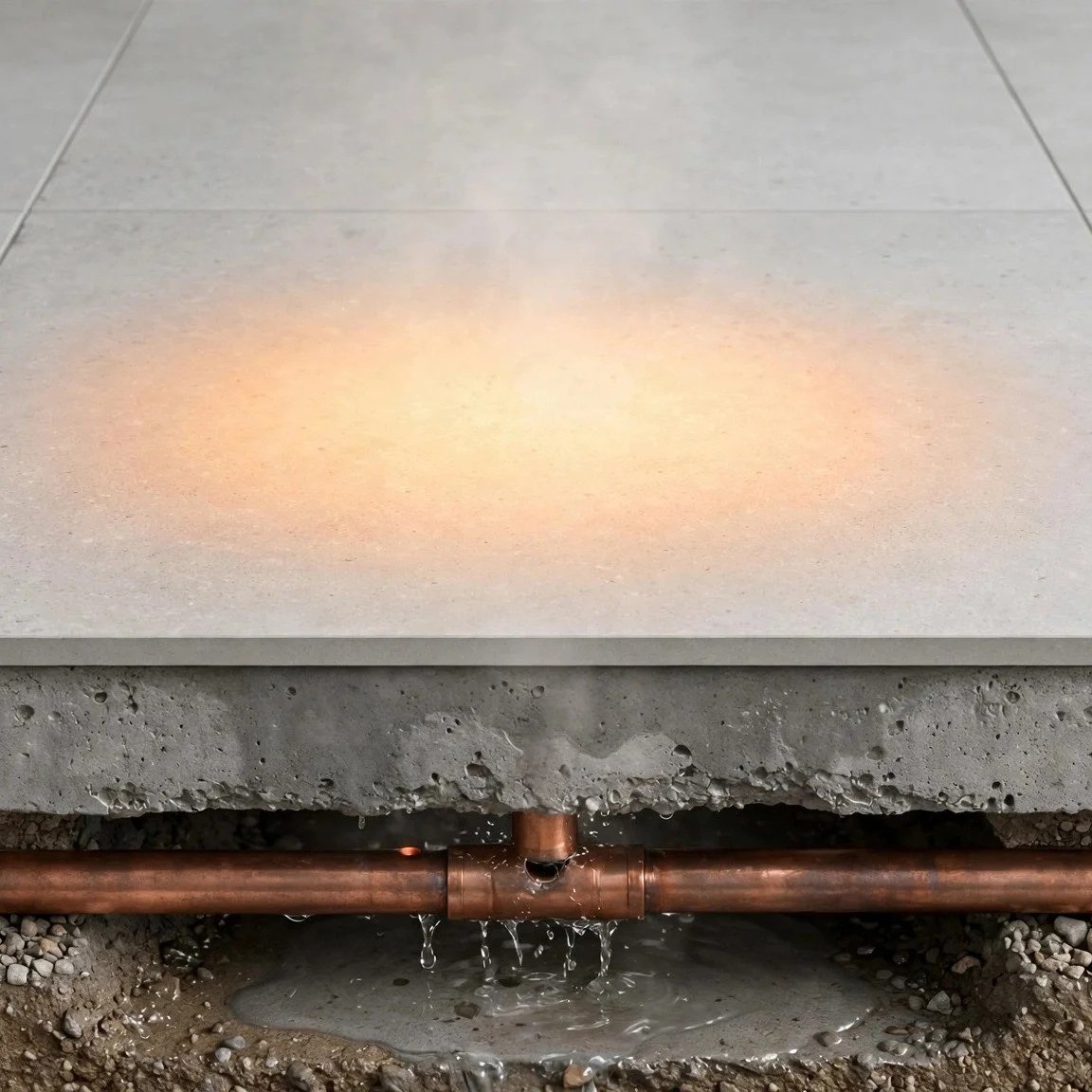
A slab leak is a leak in a water line that runs under or through the concrete foundation slab your house sits on. In a slab-on-grade home, the supply pipes for both hot and cold water are often buried in or just beneath that concrete. When one of those lines springs a leak, the water has nowhere obvious to go, so it soaks the ground under the slab and works its way up. The frustrating part is that the pipe is sealed in concrete, so you almost never see the leak itself. You see the clues it leaves behind.
Catching those clues early is the point. A slow slab leak can run for months before anyone notices, and by then it has often softened the soil under the foundation and fed enough moisture into the structure to grow mold. The earlier you read the signs, the smaller the fix tends to be.
What A Slab Leak Actually Is
Your home's water arrives under pressure and splits into a cold line and a hot line. In older slab construction, copper runs were routed through the concrete as the shortest path from the water heater to each fixture, so a pinhole or split can open anywhere along that buried run. Cold-line leaks tend to show up as damp, cool flooring or a rising bill. Hot-line leaks announce themselves differently, and that difference is the single most useful early tell a homeowner has.
Hot line versus cold line: A leak on the hot-water line pushes heated water into the ground directly under the concrete. Concrete holds and conducts that heat, so a patch of floor above the leak feels noticeably warmer than the tile or laminate around it. If you walk across a room barefoot and hit a warm band on the floor for no reason, that is a classic hot-line slab leak. A cold-line leak gives the opposite reading, a cool or clammy spot, and is easier to miss because it feels like ordinary floor.
The Early Warning Signs, In Rough Order
Slab leaks rarely give you every symptom at once. They tend to reveal themselves one clue at a time, which is why knowing the full list matters.
A warm spot on the floor: Warm flooring with no heating source beneath it points to a hot-water line leaking below the slab, and it wastes energy, since the water heater keeps reheating water that is draining into the dirt. It is the earliest sign many people notice.
Running water with everything off: Shut off every faucet, the dishwasher, the washing machine, the ice maker, and the irrigation. Stand still in a quiet house. If you can hear a faint hiss or trickle of water moving through the walls or floor, a line is leaking somewhere it shouldn't. Under a slab, that sound often seems to come from the floor itself.
An unexplained jump in the water bill: A leak that runs day and night moves a surprising volume of water. If usage climbs sharply with no change in habits and no dripping fixture in sight, a hidden leak is the leading suspect, and a slab leak is one of the few that hides completely.
Low water pressure: When water escapes the line before it reaches your fixtures, the pressure at the tap drops. A slow, whole-house decline in pressure, especially on the hot side alone, can trace back to a slab leak bleeding off flow underground.
Cracks in floors or walls: Water pooling under the slab softens and shifts the soil that supports it. As sections settle unevenly, you may see new cracks in tile, in drywall, or around door frames that suddenly stick. New cracks paired with any of the water signs above deserve a closer look.
Damp or warped flooring: Moisture wicking up through the slab can lift laminate, cup hardwood, loosen tile, or leave carpet inexplicably damp in one area. A spot that stays wet after everything else dries out is a red flag.
A musty or moldy smell: Trapped moisture under flooring and inside wall cavities feeds mold and mildew. A persistent musty odor, or visible mold at the base of a wall, often means water has been present long enough to colonize. That is the point where a small leak has become a bigger problem.
Why Slab Leaks Happen
Knowing the causes helps you gauge how likely a leak is in your home. A buried water line is a bit like a garden hose left pinned under a heavy flagstone for decades: the constant contact and pressure that seem harmless day to day slowly wear a weak point until it gives. Several forces drive that failure.
Abrasion: Where a pipe passes through or rests against concrete, normal expansion and contraction rubs the metal against the rough slab. Over years, that friction wears the pipe wall thin until it perforates.
Corrosion: Copper reacts with certain soil chemistries and with aggressive water, pitting from the outside in or the inside out. Hard water leaves scale that can accelerate the process at weak points.
Poor installation: A pipe kinked during the original build, soldered badly, or laid in direct contact with rebar or rock starts life with a built-in weak spot that surfaces years later.
Shifting soil: Foundations move as the ground beneath them expands, contracts, and settles. That movement flexes the rigid pipe until a joint or bend fatigues and splits.
High water pressure: Pressure above the range a system is built for stresses every joint and thin section around the clock. Left unregulated, it shortens the life of buried lines considerably.
Why Acting Early Pays Off
A slab leak is one of those problems where waiting truly costs more. The water does two kinds of damage at once. Underground, it saturates and undermines the soil the foundation depends on, which can lead to settling, cracking, and structural repairs that dwarf the plumbing fix. Above ground, the moisture feeds mold inside walls and under floors, which becomes a health and remediation issue on top of everything else.
How To Confirm It: The Meter Test
Before you call anyone, you can gather evidence with a test you can safely run yourself. Locate your water meter, usually near the street or in a box at the property line.
Running the meter test: Turn off every water-using fixture and appliance in and around the house. Then look at the meter. Many meters have a small triangular or star-shaped low-flow indicator, sometimes called a leak dial, that spins whenever water is moving. If that dial is turning with everything shut off, water is escaping somewhere in your system. For a second read, note the meter numbers, wait an hour with no water use, and check again. If the reading has climbed, you have confirmed a leak. The meter test tells you a leak exists, though not exactly where, and that is where a plumber's tools take over.
How Pros Find A Slab Leak Without Destroying The Floor
The old fear with slab leaks is a plumber jackhammering the entire floor to hunt for a pinhole. Modern leak detection avoids that. Technicians use electronic and acoustic equipment that listens for the specific sound of pressurized water escaping a pipe, picking it up through the concrete so they can pinpoint the leak to a small area. They may also pressurize the lines with tracer gas or use thermal readings to narrow the hot-line location. The goal is to mark an X over a square foot or two of slab rather than opening the whole room, so any concrete work that follows is as small as possible.
Repair Options, In General Terms
Once the leak is located, there are a few standard routes, and the right one depends on the pipe's age, the number of leaks, and access.
Spot repair: For a single, accessible leak, a plumber can open a small section of slab, cut out the failed piece, and splice in new pipe. It is the least invasive fix and works well when the rest of the plumbing is sound.
Reroute: Rather than reopening the slab, the technician abandons the failed under-slab section and runs a new line for that circuit through walls or the attic, above the concrete entirely. This sidesteps the foundation and is common when the buried run is hard to reach.
Repipe: When a home has had several slab leaks, the buried pipe is often near the end of its service life. A whole-house repipe replaces the aging lines, usually routing new pipe above the slab, so you stop chasing one leak after another.
None of these are do-it-yourself work. Locating and repairing a line under a foundation calls for specialized detection gear, controlled concrete cutting, and correct pipe selection. The homeowner's job is to spot the signs early, run the meter test to confirm, shut off the main if water is actively spreading, and bring in a licensed plumber before the damage compounds.
Frequently Asked Questions
Can I keep using water while I wait for a plumber?
For a slow leak, you can usually keep using water short-term, but shut the main off whenever the house is empty or overnight to stop water from pooling under the slab while no one is watching. The main shutoff is typically a lever or wheel valve where the supply enters the house, often in a garage or near the water heater in many slab-built homes. If flooring is actively getting wetter or you see water rising, leave the main off until a plumber arrives.
Does homeowners insurance cover a slab leak?
Coverage varies widely, but many policies help pay for the resulting water damage and the cost of accessing the pipe, such as cutting and re-pouring concrete, while excluding the worn pipe itself. Insurers often distinguish between sudden accidental leaks and gradual wear, so document the discovery date and keep the plumber's leak-detection report. Call your carrier before repairs start, since some require an approved detection step first.
How long can a slab leak go unnoticed?
Small leaks can run for months, occasionally over a year, before symptoms surface, because the water disperses into the soil instead of pooling visibly. A useful early check is your water heater's run time: a hot-line slab leak makes the heater cycle far more than usual, so a unit that seems to run constantly can flag a leak weeks before a warm floor or a bill spike appears.
How do plumbers fix a slab leak without breaking up the whole floor?
There are usually three routes, and the pipe's condition decides which. A spot repair opens the slab at the single leak and patches that section, which fits when the rest of the piping is sound. A reroute abandons the leaking line under the slab and runs a fresh pipe overhead through walls and the attic, avoiding more concrete work when the bad run is short. A full repipe replaces the system when the pipe is failing in several spots at once, common with older copper suffering pinhole corrosion. Electronic detection pinpoints the leak first so the crew opens the smallest possible area rather than chasing it blind.
Is a foundation crack always a sign of a slab leak?
No. Concrete slabs develop hairline shrinkage cracks as they cure, and normal soil movement causes some cracking in almost every home, none of which involve plumbing. A crack points toward a slab leak only when it appears or widens alongside water clues, such as a damp spot, a warm patch, or a bill spike, and especially when the crack keeps growing over weeks rather than staying static.
Can tree roots cause a slab leak?
Roots rarely pierce a pressurized copper supply line, which is what a true slab leak involves, but they routinely invade and crack the sewer or drain lines under a slab, which produces sewage odors and slow drains rather than a warm floor or a spinning meter dial. A plumber uses a camera inspection to tell a root-damaged drain apart from a leaking supply line, since the two problems call for different repairs.