
A water heater makes a range of sounds, and they don't all mean the same thing. Popping and rumbling are the classic ones people ask about, and they have a specific, well-understood cause — but a ticking or a screech is telling you something different. Sorting out which noise you're hearing is the first step, because it points you straight to the cause and to whether it's harmless or worth acting on.
Popping and Rumbling: It's Sediment
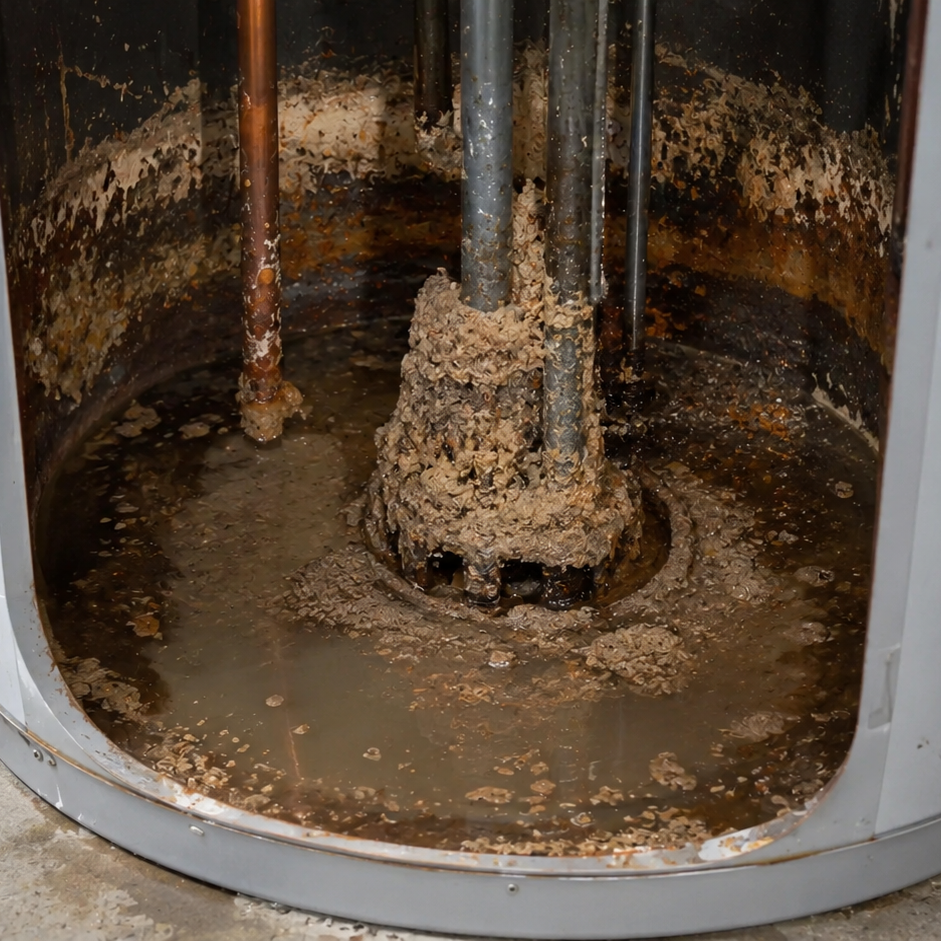
The popping, rumbling, or banging that happens when the heater runs is the sound of sediment. Hard water — common across the Phoenix area — carries dissolved minerals like calcium and magnesium that settle out over time and collect as a layer on the bottom of the tank, right over the burner on a gas unit. When the heater fires, water gets trapped underneath and inside that sediment, and as it heats, it boils and bubbles, forcing steam up through the buildup. That popping and rumbling is the steam pushing past the sediment and rattling the tank.
The more sediment, the louder and more frequent the noise. So a heater that's gotten progressively louder over the years is one that's accumulated a thick sediment layer.
What Other Noises Mean
Not every water heater sound is sediment. Matching the noise to its cause keeps you from worrying about a harmless one or ignoring one that matters.
| Noise | Likely cause | Concern level |
|---|---|---|
| Popping, rumbling, banging | Sediment buildup in the tank | Worth flushing; affects efficiency and life |
| Ticking or tapping | Normal pipe expansion/contraction, or a check valve | Usually normal |
| Crackling or sizzling (electric) | Sediment on the lower heating element, or condensation | Worth checking |
| Screeching or whistling | Water forced through a restricted or partly closed valve | Check the valves |
| Knocking in the pipes (water hammer) | Pressure issue when valves close | A plumbing issue, not the tank itself |
Ticking is usually just metal pipes expanding and contracting as hot water moves through them, or a check valve — generally nothing to worry about. A crackle or sizzle on an electric heater can mean sediment has settled on the lower element. A screech or whistle usually means water is being squeezed through a valve that's restricted or not fully open. And a knocking in the pipes is often water hammer, a pressure issue in the plumbing rather than a problem inside the tank.
Why the Sediment Noise Matters
The popping itself is mostly harmless to hear, but what it represents isn't. The sediment layer sits between the burner and the water, so the heater has to work harder and longer to heat through it — wasting energy and raising your bill. That trapped heat also overheats the bottom of the tank, stressing the steel and the protective lining and accelerating wear, which shortens the heater's life and can lead to early leaks. Sediment can also reduce the amount of hot water the tank can effectively hold and clog the drain valve. So the rumble is a sign the heater is quietly aging faster and running less efficiently than it should.
What to Do About It
For popping and rumbling, the fix is flushing the tank to wash out the sediment. On a heater that recently started making noise, a flush often quiets it and restores efficiency. On a tank that's gone years without flushing, the sediment can be hardened and heavy, and flushing an old, neglected tank should be done carefully — sometimes the buildup is so set that draining is difficult, or the noise reveals a tank near the end of its life. Prevention is better: periodic flushing keeps sediment from building up, and since hard water is the root cause, a water softener dramatically slows it while protecting the rest of your plumbing.
For the other noises, the action depends on the cause: ticking generally needs nothing, a screech means checking that valves are fully open and not restricted, and pipe knocking points to a pressure issue worth addressing. If you're unsure which noise you have, or the heater is old and loud and has never been flushed, it's worth having a plumber check it rather than assuming — the right diagnosis is what tells you whether it's a quick flush or a sign the heater is wearing out.
FAQs
Why does my water heater make a popping sound?
Sediment. Hard-water minerals settle into a layer on the bottom of the tank, and when the heater runs, water trapped under and in that sediment boils and forces its way up, popping and rumbling against the buildup and the tank. The more sediment, the louder it gets. It's especially common in hard-water areas like the Valley, and flushing the tank usually quiets it.
Is a rumbling water heater dangerous?
The noise itself is generally harmless — it's water boiling through sediment, not an imminent failure. But it signals that sediment is making the heater work harder, wasting energy and shortening the tank's life, which over time can lead to leaks. Water heaters have a temperature-and-pressure relief valve as a safety device; if you ever see leaking or signs of overheating, have it checked promptly.
What does it mean if my water heater ticks instead of pops?
Ticking or tapping is usually normal — it's typically metal pipes expanding and contracting as hot water flows through them, or the sound of a check valve. Unlike popping and rumbling, ticking generally isn't a sign of sediment or a problem with the tank. If it's accompanied by other symptoms like leaking or poor heating, then it's worth a closer look, but on its own, it's usually nothing.
Will flushing the tank stop the noise?
Usually, if the noise is popping or rumbling from sediment, and the tank is otherwise sound. Flushing removes the buildup, so water heats cleanly and quietly. If the heater is old with heavily hardened sediment, a flush may help only partly, and the noise can indicate the tank is near the end of its life. Other noises, like ticking or screeching, have different causes and aren't fixed by flushing.
How do I prevent the popping sound from coming back?
Flush the tank periodically as routine maintenance, especially in hard water, where sediment builds up fast. Even better, treat the water with a softener, since hard water is the underlying cause — softening dramatically slows sediment buildup and protects your entire plumbing system. Together, regular flushing and softened water keep the tank quiet, efficient, and longer-lasting.
Match the Noise to the Cause
A water heater's sounds are a useful language once you know it: popping and rumbling mean sediment, ticking usually means harmless expansion, a screech points to a valve, and pipe knocking is a pressure issue. The sediment noises are the ones worth acting on because they signal reduced efficiency and an aging tank. Flush it to quiet it, soften the water to prevent it, and get a second opinion if an old tank is loud — that's how you keep both the noise and the bigger problems away.