
Plumbing is supposed to run quietly. When it starts banging, humming, ticking, or gurgling, the noise is not random. Each sound is a symptom, and each symptom points back to a specific mechanical cause somewhere in the supply or drain system. Once you can match the sound to the mechanism behind it, you stop guessing and start knowing whether the fix is a five-minute adjustment or a repair worth a call.
The single most useful first cut is which side of the plumbing is talking. Supply-side noise (the pressurized water feeding your fixtures) tends to bang, hum, or whistle. Drain-side noise (the water leaving through waste lines) tends to gurgle. That one distinction narrows the field before you touch a single valve.
The Loud Bang: Water Hammer
The most alarming pipe noise is a sharp bang or thud that lands the instant a faucet, valve, or appliance shuts off. That is water hammer, and it is exactly what the name describes.
Water moving through a pipe carries momentum. When a valve closes quickly, that moving column of water has nowhere to go and slams to an abrupt stop. The energy has to convert into something, so it converts into a pressure spike, a shock wave that hits the closed valve and the pipe wall like a struck hammer. You hear the impact and sometimes feel the pipe jump.
Older homes were plumbed with air chambers to absorb this shock, short capped stubs of vertical pipe near fixtures that hold a cushion of trapped air. Air compresses; water does not. When that cushion is present, the shock wave pushes into the air pocket instead of the pipe. The trouble is that trapped air slowly dissolves into the water over months and years. Once an air chamber fills with water, it is waterlogged and can no longer cushion anything, so the hammer returns.
The fix follows the cause. For waterlogged air chambers, shut off the main, open the highest and lowest faucets in the house to drain the lines completely, then close them and turn the water back on. Draining lets air refill those chambers. For a house that never had chambers, or where the hammer keeps coming back, a mechanical water-hammer arrestor is the durable answer. It is a sealed device with a spring-loaded or air-charged piston that cannot waterlog the way an open air stub does, and it installs at the fixtures where the banging starts.
Water hammer is worth taking seriously beyond the noise. Every bang is a pressure spike traveling through your joints and fittings, and repeated spikes over time loosen connections and stress solder joints that were never meant to take that kind of repeated shock.
The Steady Hum or Vibration
A hum or a low vibration is different from a bang. It is continuous rather than sudden, and it often rises while water is running and fades when it stops. This is usually the sound of pipe walls resonating, and the most common driver is water pressure that is simply too high.
When incoming pressure runs above the range residential plumbing is designed for, water forces through the lines hard enough to set the pipe walls vibrating, the same way blowing harder across a bottle raises the pitch. The vibration transmits along the pipe and into the framing, and you hear it as a hum.
Confirming this one is easy. Thread an inexpensive pressure gauge onto an outdoor hose bib and open the valve. Residential systems are generally happiest below roughly 80 psi. A reading well above that explains the hum and points to the fix: a pressure-reducing valve (PRV) installed on the main line, or an adjustment to an existing PRV that has drifted. Bringing pressure back into range quiets the hum and, as a bonus, eases the water hammer and whistling that high pressure also feeds.
The Ticking or Tapping After Hot Water
If the noise is a light ticking or tapping that shows up shortly after you run hot water and fades as things cool, you are almost certainly hearing thermal expansion, not a leak.
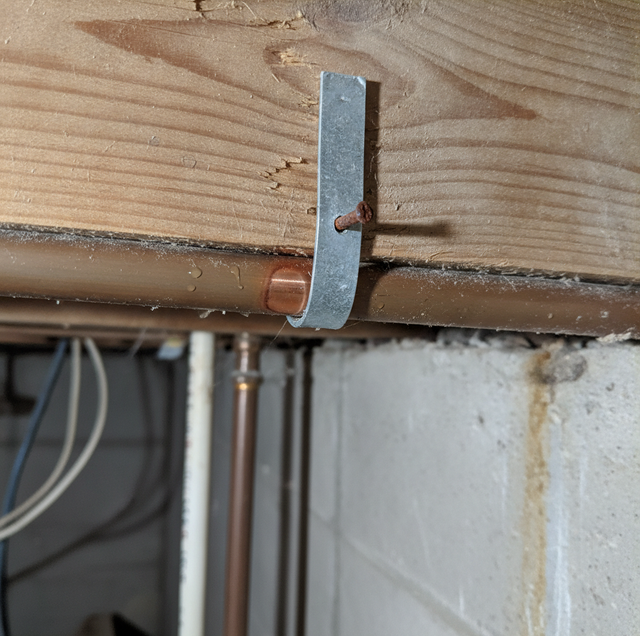
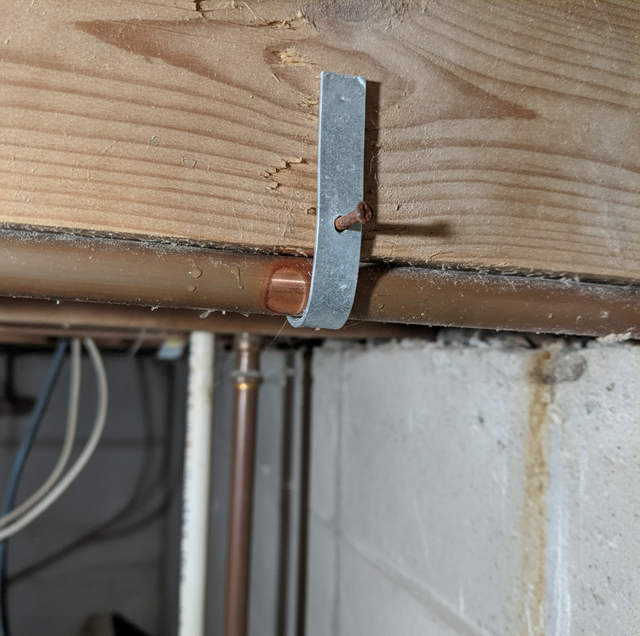
Metal pipes carrying hot water expand as they warm and contract as they cool. That movement is small, a fraction of an inch over a run of pipe, but it is enough. As a hot line lengthens, it slides against the wood framing it passes through or the metal straps holding it in place, and each little slip makes a tick. Because the sound tracks temperature, it follows your hot-water use precisely: run a hot shower, and it starts; let the pipes cool, and it stops. A leak would not politely time itself to your water heater.
The cure is to give the pipe room to move without rubbing. Cushioning the contact points with pipe insulation, felt, or rubber-lined clips lets the pipe expand and contract silently against a soft surface instead of scraping bare wood or steel.
The Rattle or Bang From Loose Pipes
A rattle, or a hollow bang that happens when water surges rather than when a valve shuts, often points to pipes that are simply not held down well enough.
Pipes are secured to the framing with straps and clips at intervals. When a strap works loose or was never fully tightened, the pipe is free to move. A pressure change or a burst of flow makes the loose section jump and knock against a nearby stud or joist. The knock is the pipe hitting the wood.
This one is mechanically simple: find the loose section, which usually announces itself by moving when you run water nearby, and secure it. Re-fastening the strap, adding a clip, or cushioning the pipe where it meets the framing prevents it from traveling far enough to knock.
The Whistle or Screech at a Fixture
A high, thin whistle or screech that comes from one specific faucet or valve, rather than the walls at large, is a restriction singing.
Picture a whistle. The sound comes from air squeezing fast through a narrow gap. Water does the same thing. When water is forced through a partial obstruction at high speed, it can set the obstruction vibrating and produce a whistle. Three things commonly create that restriction at a fixture: a washer that has worn down and no longer seats cleanly, a valve seat that vibrates as water rushes past, or a supply valve that is only partway open, choking the flow through a narrow opening.
Because the source is local, so is the fix. Replace a worn washer, and the seat has a clean surface to close against. Open a partly closed supply valve fully, and the water no longer has to squeeze through a pinch point. If high pressure is feeding the whistle, the same PRV that quiets a hum will help here too.
The Gurgle at a Drain
Gurgling is the odd one out, because it comes from the drain side rather than the pressurized supply side. That distinction changes entirely where you look.
A drain system depends on a vent, usually a stack running up through the roof, that lets air into the pipes so water can flow smoothly and traps stay sealed. When a drain runs and the vent cannot supply enough air, the moving water pulls a vacuum behind it. Rather than draw air from the vent, it siphons air the only other way it can: back through the water sitting in a nearby fixture trap. That air bubbling up through the trap water is the gurgle you hear, and it usually means the vent is blocked, undersized, or otherwise not doing its job. A gurgle is a signal to look up at the venting, not at your faucets.
Working the Problem Safely
Most of these diagnostics involve nothing riskier than threading on a pressure gauge or listening while someone runs a tap. Before you open a fixture, tighten a fitting, or drain the lines, close the appropriate shutoff, the fixture stop under the sink, or the main valve for the house, so you are working on a depressurized line. If a noise persists after the obvious checks, or you find yourself chasing high pressure, a stuck PRV, or a suspected vent blockage, that is the point to bring in a plumber who can trace it and correct it properly.
FAQs
What is water hammer, and why does it bang?
When a valve closes fast, the column of moving water behind it slams to a stop, and the shock wave from that sudden halt hits the pipe like a hammer. Draining the system to refill an old air chamber can quiet it, but that fix is temporary. A mechanical hammer arrestor uses a sealed, air-charged piston in a sealed chamber that cannot waterlog the way an open air chamber does, which is why it is the lasting cure.
Why do my pipes bang right when the washing machine or dishwasher switches?
Those appliances use fast-acting solenoid valves that snap fully shut in a fraction of a second, far quicker than a hand-turned faucet, so they trigger water hammer more sharply. A hammer arrestor installed at that specific appliance connection absorbs the shock at the source before it travels through the rest of the house.
What does a humming or vibrating pipe usually mean?
It often means the water pressure is too high, which sets the pipe walls resonating as water forces through them. A gauge threaded onto a hose bib that reads above about 80 psi points to a pressure-reducing valve, which is typically set around 50 to 60 psi, comfortably below the range where noise and accelerated fixture wear start to climb.
Why do my pipes tick or tap after I run hot water?
Hot-water pipes expand as they heat and contract as they cool, and as they move, they tick against the wood framing or the metal straps they pass through. A cushioned, rubber-lined pipe clamp, or an isolator sleeve slipped in where the pipe passes through framing, stops the tick without replacing any pipe. Because the sound follows your hot-water use rather than running constantly, it tracks temperature, not a leak.
What makes a faucet whistle or screech?
Usually a worn washer or a valve seat vibrating as water squeezes past it in a compression faucet; a cartridge faucet tends to whistle for different reasons, often a worn cartridge rather than a washer. A whistling toilet fill valve is a common separate culprit worth ruling out. Replacing the worn part or opening a partly closed supply valve fully removes the pinch point and stops the sound.
Is a gurgling drain a pipe problem or a vent problem?
It is typically a venting problem. When the drain cannot draw enough air from the vent stack, it siphons air through the fixture traps instead, and the sucking of air up through the standing water in the trap is the gurgle you hear. The usual root is a blocked roof vent, a bird nest, leaves, or ice, or a failed air-admittance valve; check it at the roof or under the sink where an AAV sits.