
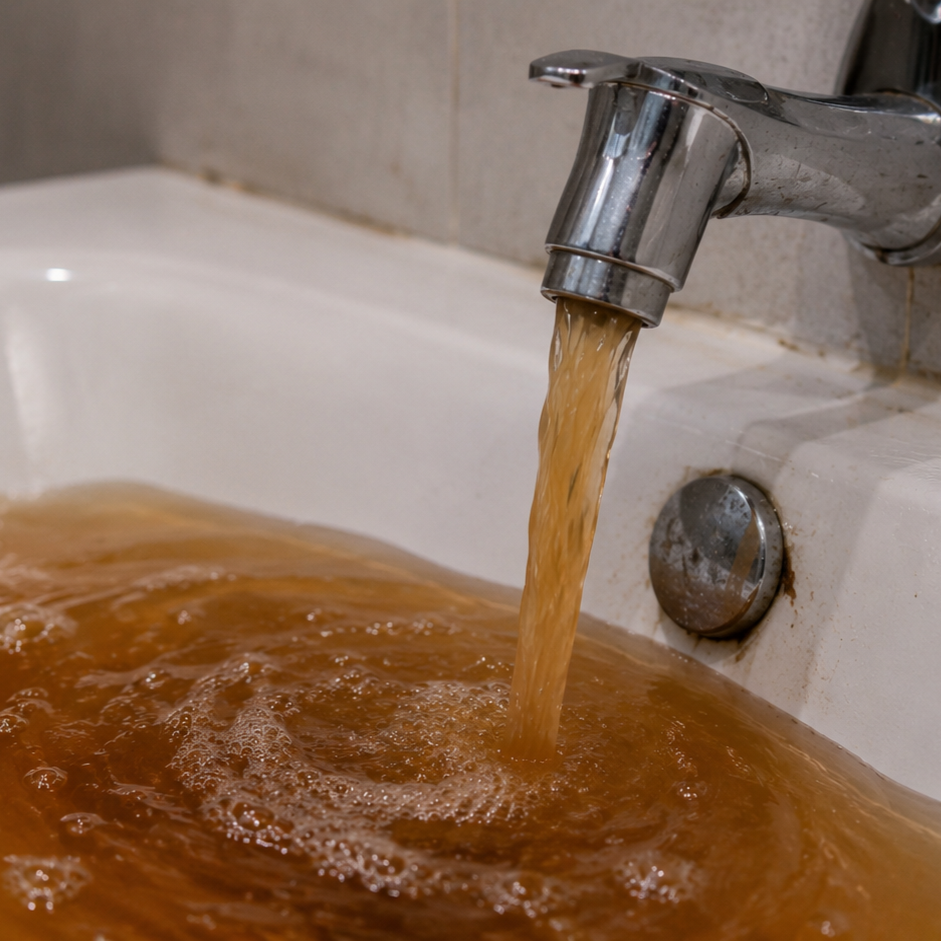
Turning on the tap and seeing brown or rusty water is alarming, especially when it's the hot water you were about to wash or bathe in. The color is iron and sediment, and where it's coming from tells you whether the cause is a simple stirred-up tank, aging pipes, or a water heater on its way out. The first clue is which faucet shows it.
Hot Only, or Both Hot and Cold?
Before anything else, check whether the discoloration appears in the hot water only or in both hot and cold. This single observation points you in the right direction.
If only the hot water is discolored, the water heater is almost certainly the source — the water is picking up rust or sediment inside the tank. If both hot and cold run brown, the heater isn't the likely culprit; instead the cause is usually in the pipes feeding the house or in the municipal supply, such as after water main work stirs up the lines. Sorting this out first saves you from chasing the wrong problem.
Cause One: The Tank Is Rusting Inside
A water heater tank is steel, protected from rust by a glass lining and a sacrificial anode rod. The anode rod corrodes in place of the tank, but once it's used up, the steel itself starts to rust from the inside. That rust tints the hot water brown or reddish. This is one of the most serious causes, because a tank rusting internally is deteriorating and often approaching the point of leaking. Discoloration from a corroding tank typically worsens over time rather than clearing up, which distinguishes it from a one-time disturbance.
Cause Two: Stirred-Up Sediment
Over the years, minerals and debris settle to the bottom of the tank as sediment. Normally, it sits undisturbed, but anything that stirs it — a sudden change in water flow, work on the plumbing, or the turbulence after the municipal supply was shut off and restored — can suspend that sediment in the water and tint it brown or yellow. Sediment-related discoloration often clears after running the water for a bit, unlike rust from a failing tank. A heater that has never been flushed has the most sediment available to stir up.
Cause Three: Rusty or Aging Pipes
Older galvanized steel pipes corrode on the inside as they age, and that rust can flake off into the water. If the discoloration shows up in both hot and cold water, or is worse first thing in the morning after water has sat in the pipes overnight, aging pipes may be shedding rust. This points to the plumbing rather than the heater, and in older homes, it can signal that the pipes are nearing the end of their service life.
| What you observe | Likely cause | What it suggests |
|---|---|---|
| Hot water only, worsening | Tank rusting internally | Heater may be failing |
| Hot water, clears after running | Stirred-up sediment | Flush the tank |
| Both hot and cold | Aging pipes or supply | Plumbing or municipal source |
| Worse after city water work | Disturbed supply lines | Often temporary |
| Worse in the morning | Rust from sitting in pipes | Aging pipes |
What the Color Is Telling You
The discoloration itself is a message about your system's condition. Sediment that clears with running is a maintenance nudge — the tank wants flushing. Rust that's hot-only and getting worse is a warning that the tank is corroding internally and may not have long left. Discoloration in all the water points away from the heater toward the pipes or supply. Reading the pattern correctly is what turns a scary brown tap into a clear next step instead of a guess.
Why It Shouldn't Be Ignored
Brown hot water is more than an inconvenience — it can stain laundry and fixtures, and when it comes from a rusting tank, it's a sign the heater is deteriorating toward failure. Catching that early lets you plan a replacement before the tank leaks and causes water damage. When the cause is sediment, flushing addresses it and improves the heater's efficiency. And when it's the pipes, identifying those points toward whether repiping is on the horizon. In every case, the discoloration is information worth acting on rather than waiting out.
FAQs
Why is only my hot water brown?
Because the discoloration is happening inside the water heater. The water is picking up rust from a corroding tank or sediment stirred up from the bottom as it's heated and drawn off. Since the cold water bypasses the heater, it stays clear. Hot-only discoloration is a strong sign that the heater, not the pipes or supply, is the source.
Is brown hot water dangerous?
It's generally more of a nuisance and a warning sign than an immediate health hazard for washing, but it shouldn't be ignored. Rusty water can stain laundry and fixtures, and when it comes from a rusting tank, it signals the heater is deteriorating. If you have concerns about your water quality, testing the supply is the way to know for certain.
Will flushing the water heater fix the discolored water?
If the cause is stirred-up sediment, flushing the tank can clear it and help prevent it from recurring. If the cause is a tank that's rusting internally, flushing won't fix it, because the corrosion is in the steel itself. The clue is whether the brown water clears after running (sediment) or persists and worsens (rust).
Why is my water brown after the city worked on the lines?
Municipal water main work or a supply shutoff and restart can stir up sediment and rust in the pipes, temporarily discoloring the water. This usually affects both hot and cold water and often clears after running the water for a while. If it's persistent or only in the hot water, the cause is more likely your heater than the city’s work.
Does brown hot water mean I need a new water heater?
Not always, but it can. If the discoloration is hot-only, getting worse, and doesn't clear with running, it often means the tank is rusting from the inside and nearing the end of its life. If it clears after running, sediment is the more likely cause, and a flush may resolve it. An inspection can tell you which situation you're in.
Why is the discoloration worse in the morning?
Water that sits in the pipes overnight has more time to pick up rust from aging galvanized piping, so the first draw in the morning can look more discolored before it clears. This pattern, especially in both hot and cold water, suggests the pipes are shedding rust rather than the water heater being the source.
Let the Color Guide You
Brown or discolored hot water is iron and sediment, and the pattern tells the story: hot-only and worsening points to a rusting tank, water that clears with running points to sediment, and discoloration in all the water points to the pipes or supply. Checking which taps are affected narrows it down fast — and turns an alarming tap into a clear decision about flushing, repiping, or replacing the heater.